s
NEW YORK STATE PSYCHIATRIC INSTITUTE

COLLEGE OF PHYSICIANS AND SURGEONS

COLUMBIA UNIVERSITY - DEPARTMENT OF PSYCHIATRY

FELLOWSHIP IN PUBLIC PSYCHIATRY
 

PROGRAM DESCRIPTION

The Public Psychiatry Fellowship of New York State Psychiatric Institute at the Columbia University Medical Center was initiated in 1980 as a public-academic liaison between New York State Office of Mental Health (OMH) and Columbia University. OMH's goal was to facilitate recruitment and retention of high caliber psychiatrists to serve as leaders in the provision of services in the public sector.

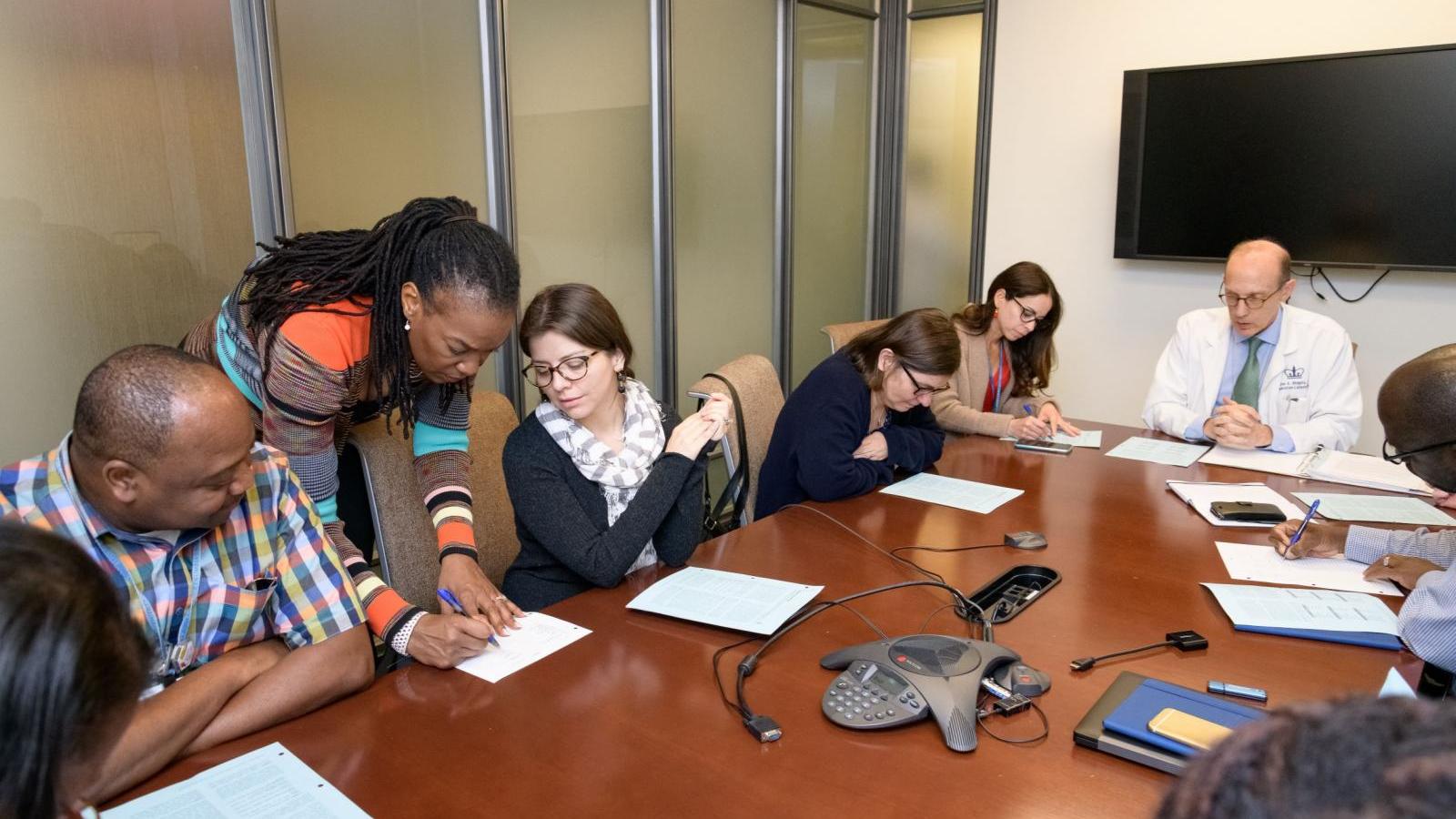
The Fellowship is a one year full-time training program for psychiatrists (see information for applicants) who have completed accredited psychiatric residency training and who plan to devote their careers to working with high risk populations in the public sector. Fellows spend two days per week in seminars at Psychiatric Institute, learning the major principles and practices of public psychiatry. They spend three days each week applying these concepts at an agency providing comprehensive mental health services in the public sector. Each Fellow meets weekly with a core faculty preceptor who provides crucial guidance in all didactic and field experiences, and with a field placement supervisor who provides clinical and administrative supervision of work at the field site.

Field placement sites are carefully selected to provide a year-long, in-depth experience of how a particular mental health service works and how the psychiatrist as clinician/manager contributes to its effort. The Fellowship has developed a list of community- and hospital-based mental health agencies from which Fellows select a training site. Fellows with special interests can also choose alternative sites. In conjunction with the field site supervisor, each Fellow negotiates a contract to perform certain duties. The duties usually include participation on a clinical team and a combination of direct patient care, supervisory consultation, administration and internal program evaluation. Through these field placements the Fellowship has developed ongoing liaisons with a wide variety of community mental health, municipal, state and not-for-profit agencies. These agencies are consistently eager to recruit our Fellow and alumni. 

Didactic Seminars provide a systematic framework of knowledge to support the field work (see Syllabus). The Academic Seminar is a year long comprehensive overview of major topics in public psychiatry, taught by the core faculty. The topics include: the structure of public psychiatry in the United States, organizational theory, management methods and strategies for public psychiatry, theory and practice in service delivery for adults with severe and persistent mental illness, psychosocial rehabilitation, internal program evaluation, fiscal administration, special populations (substance abuser, victims of abuse, people AIDS, the homeless) and managed care in the public sector.

In an Applied Seminar, Fellows use this academic framework to organize a series of clinical, management and fiscal presentations of their field placement experiences. In addition, each Fellow is expected to design and present an internal  program evaluation project examining some aspect of the service system at his/her placement site. These Applied Seminars are a crucial aspect of the Fellowship year, offering Fellows the opportunity to organize, present and evaluate their efforts at implementing the concepts they have learned during the year.

Each week the Fellowship is addressed by a guest speaker currently active in the field of public psychiatry. These talks are coordinated with concurrent topics in the Academic Seminar and cover areas of interest in public policy, delivery of services, specialized clinical work and research.

Finally, there are presentations throughout the year on the Role of the Medical Director. In these presentations, approximately thirty alumni who are medical directors of  public sector agencies describe a current management problem. The fellows and faculty help the presenter develop a strategy to deal with this situation. In several instances, the same alumnus returns later in the academic year to report on the outcome, and to present a new problem. 

Once a month Fellows visit a public sector treatment program of special interest (many with national reputations) in the New York area. These include Fountain House, Institute for Commuity Living Therapeutic Community, The Dorothy Day Apartments, the Lincoln Hospital Acupunture Clinic, Rikers Island Prison Mental Health Services, Manhattan Family Court, Brooklyn Assisted Outpatient Treatment Program and a variety of supportive housing and shelter programs. The field visits are followed by a luncheon discussion evaluating the special significance of that program.
 

Innovative Aspects of Fellowship

In recent years the Fellowship has attained increasing national prominence. Four innovative aspects of the program warrant special mention: (1) uniqueness of curriculum, (2) funding, (3) recruitment into public sector agencies, and (4) ongoing contact with alumni.

(1) Uniqueness of curriculum: The scale and depth of the academic curriculum, expanded and refined over 25 years, is highly unusual in a psychiatric fellowship. It is generally recognized that no other program provides comparable depth of training in public psychiatry.

(2) Funding: Fellowship stipends were originally funded completely by the New York State Office of Mental Health. More recently field placement agencies have increasingly supplemented these funds and now provide two-thirds of total stipends. These new funding sources have allowed the Fellowship to train 10 Fellows a year over the past decade.

(3) Recruitment into public sector agencies: The field placement experiences are conceived more as the first year of a job than as a separate training experience. Fellows receive ongoing supervision in how to create a productive role for themselves within the public agencies in which they are placed. Integration of Fellows into agencies and the eventual transition of many to staff psychiatrists at the end of the year is facilitated by the fact that the agencies provide a large portion of Fellows' stipends. Alumni surveys (see below) reveal that almost half of Fellowship alumni who remain in the New York metropolitan area are currently working at their field placement agencies. The agencies are aware of this impressive retention record and know that Fellows and alumni make valued, long-term contributions to their agencies.

(4) Ongoing contact with alumni: An increasing number of alumni are working in non-traditional settings, often as the first full-time psychiatrist. To counteract the potential problem of professional isolation, Fellowship faculty have fostered the development of a permanent network of alumni through yearly didactic presentations by more than 30 alumni, informal and formal reunions, individual consultations with faculty at career choice points, an e-mail list and this Fellowship web site.
 

The Fellowship is now serving as a national model for fellowship training in public psychiatry

As the oldest, largest and best known program training post-graduate psychiatrists to be public sector leaders, the fellowship is frequently consulted by professionals around the country interested in establishing such programs. The fellowship faculty has been consulting with nine developing programs at Yale, Johns Hopkins, New York University, University of Toronto, Orange County Behavioral Health Services/UC Irvine, CA, University of Pennsylvania, University of Pittsburgh, George Washington/St. Elizabeths Hospital and Capital Distric Psychiatric Center (CDPC) in Albany, NY.  PPF alumni at New York University, Toronto and CDPC initiated these contacts.  

 In response, Dr. Ranz, with the fellowship faculty,  has developed seven core elements which they view as essential for such a training program. The felowship's longevity and the career paths of its graduates suggest these Core Elements represent a best practice model for fellowship training in public/community psychiatry. An article describing these elements will be published in Psychiatric Services in mid 2008.


Research on The Role of The Psychiatrist in The Public Sector

The faculty has undertaken a mission to advance national discourse on the role of the psychiatrist, an issue crucial to the functioning of psychiatrists in the public sector. Over the past several years the Fellowship has conducted two alumni surveys on the role of the psychiatrist in public sector organizations. The first survey published in Psychiatric Services in May, 1996, revealed that over 90% of alumni were working in public sector agencies, with over 75% holding academic appointments and over 50% having management positions. This survey revealed that alumni of the Fellowship have made a significant impact in the development of numerous innovative community programs at public facilities throughout the region, and have served in leadership positions in the New York metropolitan area and beyond.

The second alumni survey, published in Psychiatric Services in July, 1997, revealed that respondents who are medical directors reported performing a wider variety of tasks and significantly higher job satisfaction than those who are staff psychiatrists. These results have been the focus of several presentations, including a full-day workshop at the Psychiatric Services Institute in October, 1997.

A third article, published in Psychiatric Services in September 1998, examines further the results of the second alumni survey. Despite respondents' belief that clinical collaboration activities most contribute to job satisfaction, it is in fact the performance of administrative tasks that are best correlated with overall job satisfaction. Most of the medical directors in the survey had program, rather than agency, level responsibilities. The role of program medical director can serve as a crucial next step for staff psychiatrists, offering the opportunity to perform administrative tasks.

Fellowship articles:

1. Ranz JM, Rosenheck S, Deakins S: Columbia University's Fellowship in Public Psychiatry. Psychiatric Services 47:512-516, 1996

2. Ranz JM, Eilenberg J, Rosenheck S: The psychiatrist's role as medical director: task distributions and job satisfaction. Psychiatric Services 48:915-20, 1997

3. Ranz JM, Stueve A: The Role of the Psychiatrist as Program Medical Director. Psychiatric Services 49:1203-7, 1998

4. Ranz JM,  Deakins SM. Guest editors for a section: The Role of the Medical Director in Public Mental Health Organizations. Psychiatric Quarterly: 78:169-70, 2007. This section consisted of three articles written by PPF alumni describing their management positions

5. Ranz JM,  Deakins SM. Guest editors for a section: The Role of the Medical Director in Public Mental Health Organizations. Part II. Psychiatric Quarterly: 79:1-2, 2008. This section consisted of a second three articles written
by PPF alumni describing their management positions

6. Ranz JM, Mancini AD. Public Psychiatrists' Reports of Their Own Recovery-Oriented Practices Psychiatric Services 2008 59: 100-104

7. Ranz JM,  Deakins SM, LeMelle SM, Rosenheck SD, Kellermann SL: Core Elements of a Public Psychiatry Fellowship. Psychiatric Services 59: 718-720,  2008


--------------

Surveys of National Psychiatric Organizations

An article published in July 2000 examined the variety of roles filled by psychiatrists functioning as medical directors in community settings, through a survey of all members of the American Association of Community Psychiatrists (AACP). A classification scheme of six types of medical director positions based on level of operation and breadth of supervisory responsibility was created. This classification helps clarify the medical director's role, providing guidance to psychiatrists and agencies negotiating job descriptions for this position (Psychiatric Services 51:930-2, 2000, see full text of article)

The results of the above survey of AACP members, augmented by using the same survey tool among members of the American Association of Psychiatric Administrators (AAPA), resulted in two other peer-reviewed articles. The first (The role of the psychiatrist as medical director: a survey of psychiatric administrators. Administration and Policy in Mental Health 27:299-312, 2000) describes comparisons between the AAPA and the AACP. The second (The role of the psychiatrist: job satisfaction of medical directors and staff psychiatrists. Community Mental Health Journal 37 [6]: 525-539, 2001) describes the results of the above surveys regarding job satisfaction. The findings were consistent with those reported for Public Psychiatry Fellowship alumni, that medical directors experience increased job satisfaction compared to staff psychiatrists. 

A  subsequent survey of members of the AACP, assessing the changes they have experienced over the past five years, was reported in two articles published in 2004 in  Community Mental Health Journal: 40 (5), 479-486, 2004 and 40 (5), 487-494, 2004

Programs Started and/or Run by Alumni

In the past ten years Fellows have participated in the development of numerous innovative community programs at public facilities throughout the region. These include the following: (names supplied with approval of each individual)
An extraordinary number of alumni  are currently serving in leadership positions in the New York metropolitan area and throughout NY State.  Here is the ever expanding list of management positions currently held by alumni:

NY State Facilities (16 alumni):

Municipal Facilities (15 alumni):

VA Facilities (3 alumni):

Nonprofit Hospitals (25 alumni):

Community Based Agencies (17 alumni):

Others (2 alumni):

A number of alumni have leadership positions beyond the New York metropolitan region as follows (16 alumni):


Finally, alumni are providing leadership in other countries (8 alumni):


Core Faculty

Jules Ranz , M.D. (Director) has almost forty years experience as clinician-administrator in the public sector. He was Director of Training at the Tremont Crisis Center (an innovative three year social and community psychiatry residency program), Clinical Director of Bronx Psychiatric Center (a state-run inner-city inpatient and outpatient facility), and Director of the Huguenot Center (a comprehensive community service that specialized in systems-oriented care of adults with severe and persistent mental illness). He was President of the New York Chapter of the American Association of Psychiatric Administrators from 1995-96. He is currently a member of the Board of Trustees of Project Renewal. He is a Clinical Professor of Psychiatry in the Department of Psychiatry at Columbia University Medical Center.  He is the principal author of three articles reporting activities of fellowship alumni published in Psychiatric Services published in the late 1990s, and five articles reporting surveys conducted among the members of the American Association of Community Psychiatrists and the American Association of Psychiatric Administrators (AAPA).  In 2007 he was presented with the Award for Excellence in Administration, New York Regional Chapter of AAPA, “In Recognition of Leadership and Inspiration, in Training a Generation of Public Psychiatrists and Psychiatric Administrators

Susan Deakins, M.D. (Associate Director) specializes in the treatment of both substance abuse and schizophrenia. Before switching from internal medicine and endocrinology to psychiatry she was for six years Medical Director and Treatment Service Coordinator at the Smithers Treatment and Training Center of the Roosevelt Hospital, one of the first major alcoholism programs in New York City. She was senior supervisor of treatment in a large scale study of psychoeducational multiple family group management of schizophrenia conducted by the Biosocial Treatment Research Division at the Psychiatric Institute. Subsequently she was involved in the dissemination of this model throughout New York State and in the investigation of the efficacy of its combination with intensive case management and vocational rehabilitation for adults with severe and persistent mental illness. She is Assistant Clinical Professor of Psychiatry in the Department of Psychiatry at Columbia University Medical Center.

Stephen Rosenheck, Ph.D., was one of the original founders of the Public Psychiatry Fellowship. A former historian, he specializes in public policy in mental health and has published articles on the history of de-institutionalization. He is currently doing cross national research on government health insurance programs and outpatient mental health care. Mr. Rosenheck also teaches in the Department of Child Psychiatry at Columbia University. He is an Assistant Clinical Professor of Psychiatry (in Social Work) at Columbia University Medical Center.

Sara L. Kellermann, M.D. was Commissioner of the New York City Department of Mental Health, Mental Retardation and Alcoholism Services from 1980 to 1990. In 1987 Dr. Kellermann received the Distinguished Psychiatric Administrator Award from the New York Regional Chapter of the American Association of Psychiatric Administrators. She has published papers on teaching mental health administration, the homeless mentally ill, the mental health aspects of AIDS, and mental health services in the correctional system.


Voluntary Faculty

Lewis Opler, M.D. is Director of the Research Division, of the New York State Office of Mental Health. Widely known as a clinical researcher, Dr. Opler has conducted studies and published extensively in the areas of schizophrenia, psychopharmacology and public psychiatry. He developed and co-authored the Positive and Negative Syndrome Scale (PANSS). An advocate for the rights of patients with severe and persistent mental illness, Dr. Opler is an Honorary Member of the National Alliance for the Mentally Ill of New York State (NAMI-NYS). He is Clinical Professor of Psychiatry at New York University School of Medicine and Adjunct Professor of Psychiatry at the Columbia University College of Physicians and Surgeons.

Ezra Susser, M.D.  is Professor of Epidemiology and Psychiatry and  head of the Department of Epidemiology at the Mailman School of Public Health of Columbia University, and head of the Epidemiology of Brain Disorders Department at the New York State Psychiatric Institute.  His primary research has been on the epidemiology of psychotic disorders.  He has studied the interrelationships between homelessness and psychotic disorders; compared psychotic disorders in low and high income countries;  and related prenatal exposures to the risk of schizophrenia in adulthood. Starting from his early work on homelessness, and later work on HIV, Dr. Susser has also focused on the health of inner city urban populations, and was formerly director of the Center for Urban Epidemiologic Studies at the New York Academy of Medicine.  He has published on the development of epidemiology as a discipline:  genetic epidemiology, psychiatric epidemiology, and epidemiology more generally.

Mindy Fullilove, M.D. holds a dual appointment in the Departments of Clinical Psychiatry and Public Health at Columbia University. She has had extensive research experience in the epidemiology of HIV infection in minority communities and in investigating the role of trauma as a co-factor in substance abuse. Previously she served as director of Multicultural Inquiry and Research on AIDS (MIRA), a component of the University of California (San Francisco) Center for AIDS Prevention Studies. Her recent publications are on the long term consequences of urban renewal for African Americans. 

The following voluntary faculty members are all graduates of the Public Psychiatry Fellowship:

Paula Panzer, M.D.,  is Deputy Chief Psychiatrist and Associate Director, Center for Trauma Program Innovation at the Jewish Board of Family and Children's Services, New York, NY.  She is on the Editorial board of Psychiatric Quarterly and was recently chair of the American Psychiatric Association Scientific Program Committee for the Institute on Psychiatric Services.  She is also former President, New York Regional Chapter, American Association of Psychiatric Administrators (1998-99).

Julia Eilenberg, M.D is Assistant Clinical Professor of Psychiatry in the Department of Psychiatry at Columbia University Medical Center. She  is in private practice in Rhinebeck, NY, and consults to various local agencies, including the Astor Services for Adolescents in Poughkeepsie, NY. 

Hunter L. McQuistion, MD,   is Director, Division of Integrated Psychiatric Services, Dept of Psych, St. Luke's Roosevelt Hospital Center. Prior to that, he was Chief Medical Officer, Division of Mental Hygeine, NYC Department of Health and Mental Hygeine, and formerly Medical Director, Project Renewal, Inc., a nonprofit agency serving homeless people in New York City.   Dr. McQuistion is an Associate Clinical Professor of Psychiatry at the Mount Sinai School of Medicine.  He is on the Board of Directors of the American Association of Community Psychiatrists, Chair of the APA Committee on Poverty, Homelessness and Psychiatric Disorders,  and on the advisory board of NAMI-NYC Metro, a local affiliate of the National Alliance for the Mentally Ill.

Molly Finnerty, MD.  is Director of Guidelines Initiatives, Division of Strategic Planning, NYS Office of Mental Health. She is APA New York County District Branch Assembly Representative, President, Picnic for Parity, NYS MHA Board Member, NAMI-FACT Board Member, and Director of First Break Program. She is an Assistant Clinical Professors of Psychiatry  in the Department of Psychiatry at Columbia University Medical Center.

Juliana Ekong, MD  is Associate Medical Director  for Behavioral Health of Amerigroup and Assistant Clinical Professor of Psychiatry in the Department of Psychiatry at Columbia University Medical Center.

Warren Y.K. Ng, MD  is the Director of the Special Needs Clinic, a family based HIV mental health program at Columbia Universtiy Medical Center of NY Presbyterian Hospital. He is also the director of the mental health services at Incarnation Children's Center and the Family Care Center at Harlem Hospital. He is the President of the New York Council on Child and Adolescent Psychiatry and a delegate to the American Academy of Child and Adolescent Psychiatry. He is Assistant Clinical Professor of Psychiatry in the Department of Psychiatry at Columbia University Medical Center. 

Stephanie LeMelle, MD is Associate Director of Washington Heights Community Service at New York State Psychiatric Institute and Associate Clinical Professor of Psychiatry at Columbia University Physicians and Surgeons. She is the Chairperson of the Board of Directors for Pathways to Housing.  She is also a Mac Arthur Foundation Fellow, working on their Network on Mandated Community Treatment. She  is particularly interested in how housing is used as leverage to engage people in psychiatric treatment.

Elizabeth Oudens, MD is Director of Psychiatry at Project Renewal, Inc. and Secretary of the Executive Committee of the New York Regional Chapter of the American Association of Psychiatric Administrators.

Andrew Kolodny, MD is Vice Chair for Psychiatry at Maimonides Medical Center. Dr. Kolodny has a longstanding interest in mental health and substance abuse policy. He was previously the Medical Director for Special Projects in the Office of the Executive Deputy Commissioner for the New York City Department of Health and Mental Hygiene. Dr. Kolodny is a past recipient of the Daniel X. Freedman Congressional Health Policy Award. Dr. Kolodny is a former President of the American Association of Psychiatric Administrators New York Regional Chapter and is presently Chair of the American Psychiatric Association New York County District Branch Public Psychiatry Committee.

Mary Barber, MD is Director of Community Services, Rockland Psychiatric Center, after having served as Clinical Director, Ulster County Mental Health Department. She was  president of the Association of Gay and Lesbian Psychiatrists  (AGLP) from  2001-5. She is Co-Editor of the Journal of Gay and Lesbian Mental Health (AGLP's journal), co-chair of the Group for Advancement of Psychiatry (GAP) Committee on LGBT Issues, and a distinguished fellow of the APA. She also co-chaired the production team of the documentary, “Abomination:  Homosexuality and the Ex-Gay Movement,” directed and produced by Alicia Salzer, MD, now in distribution by Frameline.

Dianna Dragatsi, MD is Director of the Inwood Clinic of Washington Heights Community Service at New York State Psychiatric Institute and Assistant Clinical Professor of Psychiatry at Columbia University Medical Center. She is also a voluntary clinical supervisor for the Addiction Psychiatry Research  Fellowship of Columbia University.


Fellowship Headquarters and Field Placements

The headquarters of the Fellowship is in the Department of Postgraduate Education of New York State Psychiatric Institute. The Institute's library and other educational facilities, as well as the expertise of its internationally recognized professional staff, are readily available to the Fellows.

Through work in field site placements, Fellows have the opportunity to develop themselves as leaders in team-based clinical settings and to explore the approaches that have proven effective in the public sector. These include ACT Teams, clubhouses, day treatment programs, partial hospitalization, and psychiatric rehabilitation. Following is a list of field sites selected by the Fellowship in recent years:

1) St. Luke's-Roosevelt Medical Center, Department of Psychiatry, New York, NY . A comprehensive public sector mental health service system in a prominent medical center on Manhattan's West Side. Opportunities include working in the following programs: Integrated Psychiatric Services (run by a fellowship graduate who is reconfiguring the service to emphasize recovery-oriented practices), Child and Adolescent Psychiatric Services, the Addiction Institute of NY and the Residential Community Service (developed and run by another of our graduate). This latter service includes a number of joint ventures with Fountain House, the protyptical clubhouse, and Urban Pathways, a unique experience with the homeless mentally ill, utilizing a network of service and residential alternatives, and several other supportive residential programs in the neighborhood.

2) Project Renewal , New York, NY. A not-for profit community based rehabilitation agency providing residential, counseling and social services to homeless adults who are suffering from substance abuse, mental illness and/or AIDS. In recent years Fellows have worked in an SRO residence, alcohol residential treatment programs, men's and women's shelters and a mobile van. The director of psychiatry is a fellowship graduate.

3) NYS Office of Mental Health Facilities:

South Beach Psychiatric Center, Staten Island, NY . A model state psychiatric facility, providing comprehensive community and inpatient service to the predominantly middle class borough of Staten Island and a major portion of Brooklyn. The clinical director is a fellowship graduate.

Manhattan Psychiatric Center, Wards Island, NY providing inpatient and outpatient services, including the innovative STAIR program , a structure environment for patients with a history of interpersonal violence.

Bronx Psychiatric Center, The Bronx, NY
, affiliated with Albert Einstein College of Medicine, providing inpatient and outpatient services, including an ACT team.

Rockland Psychiatric Center, Orangeburg, NY,   specializing in intermediate and extended inpatient treatment, RPC also provides supportive residential care a Residential Care Facility for Adults and a State Operated Community Residence on campus. In addition, RPC provides varying levels of community based mental health services in Rockland, Westchester, Orange and Sullivan counties and a specialized statewide service for people who are deaf and mentally ill. Both the clinical drector and director of community services are fellowship graduates.

Kirby Forensic  Psychiatric Center, Wards Island, NY, a maximum security hospital providing secure treatment and evaluation for the forensic patients and courts of New York City.

4)  Ulster County Mental Health Service, Kingston, NY . A county-run agency located in the Hudson River region of New York State, it serves as the primary mental health facility for a largely rural area. Comprehensive outpatient mental health services are provided for adults and children with acute and long-term psychiatric illnesses. This model agency has a record of innovative services and collaborates extensively with county vocational rehabilitation services.

5) The Bridge Inc., New York, NY. A voluntary agency on Manhattan's Upper West Side providing comprehensive services for adults with severe and persistent mental illness. Services include a continuing day treatment program, prevocational training and a supported work program, nursing and medical support services, group and individual counseling and a number of supportive community residences.

6) Washington Heights Community Service (WHCS) , Audubon and Inwood Clinics, New York, NY . A state-run comprehensive treatment program for the severely and persistently mentally ill living in the inner city. WHCS was founded in the 1970s as a model state-university collaboration using research-based treatment and has continued on that basis for over 20 years. The clinical director of WHCS is a fellowship graduate, and the Inwood clinic is run by another graduate.

7) The Project for Psychiatric Outreach to the Homeless (PPOH) , New York, NY. A not-for-profit agency which recruits psychiatrists to work on-site at outreach programs, shelters, drop-in centers and transitional and permanent residences for mentally ill homeless persons. Psychiatrists provide evaluations, on-going treatment and staff education, working closely with case managers at these sites as consultants to treatment teams. Each psychiatrist consults with the same program on a weekly basis throughout the year.

8) Pathways to Housing, Manhattan and Brooklyn teams, NY . Founded in 1992, Pathways to Housing offers scattered site permanent housing to homeless individuals with psychiatric disabilities and addictions. Despite the challenges this population presents, Pathways is unique in what it does not require of its residents: "graduation" from other transitional programs, sobriety, or acceptance of supportive services. The vast majority of clients are moved directly from the streets into permanent, private market housing. The program then uses Assertive Community Treatment (ACT) teams to deliver services to clients in their homes. The ACT teams help clients to meet basic needs, enhance quality of life, increase social skills, and increase employment opportunities. The director of psychiatry is a fellowship graduate.

9) The Institute for Community Living (ICL) is a not-for-profit organization that provides a variety of living options to disabled New Yorkers. ICL assists adults and children with mental and developmental disabilities who need opportunities to improve their quality of life and to participate in community living by providing a variety of high quality health, mental health, vocational and residential services and supports.

10) Bowery Residents' Committee (BRC) provides outreach to homeless people living on the streets or in the subway, drug treatment, mental health care, comprehensive medical services, vocational services, and supportive communities in which to live. The medical director is a fellowship graduate.

Alternate Field Sites. In consultation with Fellowship faculty, Fellows may choose an alternate site in a public mental health facility in the Metropolitan New York area. Sites may operate under federal, state, municipal, or non-profit auspices. Fellowship faculty will evaluate proposed sites with regard to their potential for relevant clinical and administrative work, availability of a field site supervisor, training and research opportunities, and value as an educational experience. Final site selection will be made jointly by faculty, the incoming Fellow, and field site supervisors. In recent years many Fellows have requested placements focusing on specific topics. Following are examples of such placements:  

Applications

Candidates for the Fellowship must have completed an accredited residency program in psychiatry or child psychiatry. In addition, the candidate must have, or be eligible to obtain, a New York State Medical License prior to entry into the program. Of primary importance in the selection process will be the candidate's demonstrated interest in public mental health issues, especially those concerned with achieving better care for poor and otherwise disadvantaged adults with severe and persistent mental illness. Other factors considered in the selection process include the candidate's interest and ability in a) working as part of an interdisciplinary team, b) psychiatric leadership, c) internal program evaluation and d) other academic endeavors. The selection committee complies with the intent of the Affirmative Action Program and the Americans with Disabilities Act.

Applicants to the Fellowship are helped to find top quality public sector positions which serve as fellowship placements. Alternatively, psychiatrists who already have 3-5 day per week clinical and/or management positions can use the fellowship training program to become more productive in their roles. The agency or hospital salary is supplemented by a stipend  for the 1½ day per week academic curriculum and faculty supervision at New York State Psychiatric Institute.

Fellows receive appointments as Post Doctoral Clinical Fellows in the Department of Psychiatry, College of Physicians and Surgeons of Columbia University. Upon successful completion of the program they are awarded a certificate by Columbia University. The position is a full-time commitment for the academic year (July 1 to June 30), and candidates are expected to comply with that requirement.

The stipend for the academic year starting July 2009 is expected to be at least $82,000 for Fellows at the PGY5 level, and $88,000 for Fellows at the PGY6 level. Approximately 2/3 of that stipend is paid by the field placement agency, and 1/3 by New York State Psychiatric Institute (NYSPI). For those who already have 3-5 day per week positions, the supplementary stipend paid by NYS PI is approximately $27,000 - $29,000 depending on PGY level.

Communication can be sent to the fellowship director:
Jules, M. Ranz, M.D.
Box 111
New York State Psychiatric Institute
1051 Riverside Drive,
New York, New York 10032

Dr. Ranz can also be contacted by telephone (212- 543-5655) or e-mail (jmr1@columbia.edu).

This brochure was last updated on March 20, 2009