BIOLOGY OF REWARD MECHANISMS - DR. ELIOT L. GARDNER

| Slidelist | References | Glossary | Questions and Answer Session | Reading & Papers | Bio

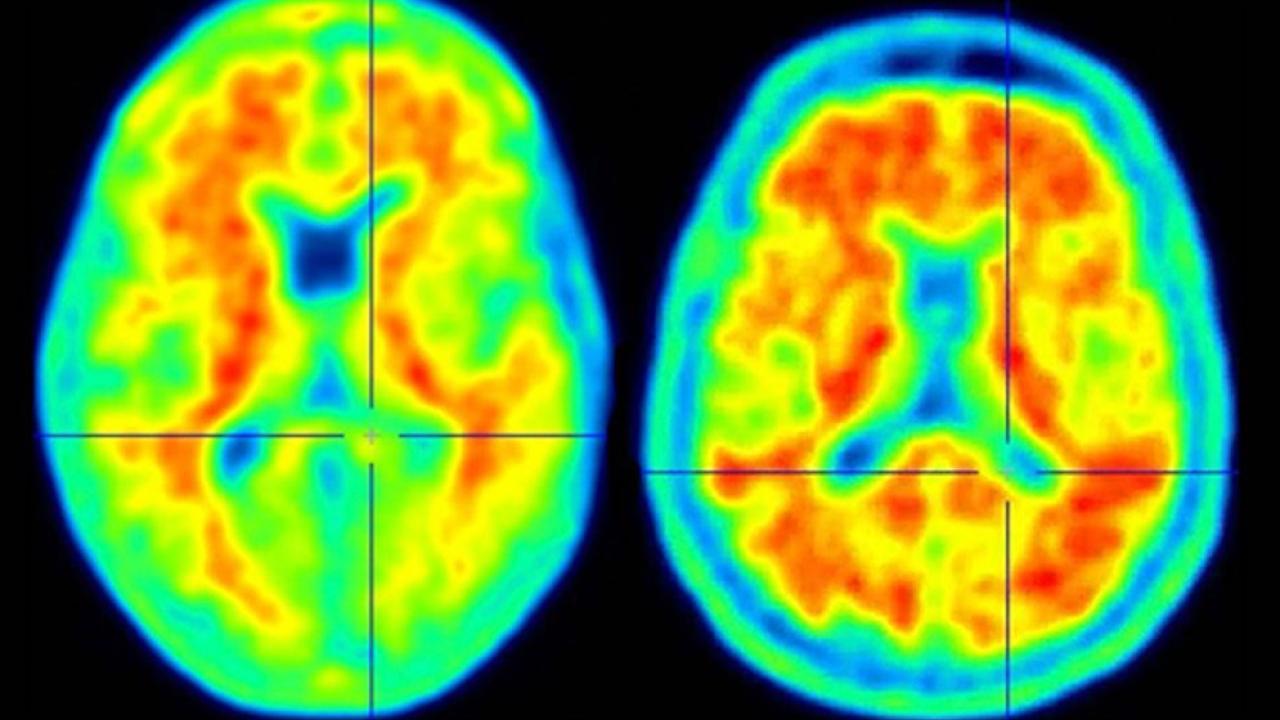
OVERVIEW: The goal of this lecture is to describe the neurobiological mechanisms underlying reward/reinforcement and the role of these mechanisms in drug addiction and its attendant phenomena - including craving, rebound dysphoria, and relapse. We will describe the neuroanatomy, neurophysiology, and neurochemistry of the brain's reward/reinforcement circuits. We will describe laboratory paradigms for studying the role of brain reward mechanisms in addiction - including intracranial drug self-administration in lab animals, electrical brain-stimulation reward, and in vivo brain microdialysis and microelectrochemistry. We will describe genetic variation in brain reward activation by addicting drugs, and the neurobiology of drug craving. We will note the implications of addictive drug action on brain reward mechanisms for the development of rational pharmacotherapies for drug addiction at the human level.

KEY CONCEPTS:

Using a self-administration paradigm in which a progressive-ratio schedule of reinforcement is utilized to assess the amount of work animals will expend for such self-administration, a hierarchy of appetitiveness amongst different classes of addictive drugs can be calculated (cocaine extremely appetitive; heroin highly appetitive; valium marginally appetitive).

Strikingly, this hierarchy correlates strongly with hierarchies of appetitiveness reported by human users of these same drugs. The facilitation of the functioning of the pleasure/reward/reinforcement circuitry of the brain by addicting drugs (e.g., Fig. 1) is significantly attenuated by opioid antagonists (e.g., Fig. 2), implicating endogenous opioid peptidergic circuitry in addictive drug action on brain pleasure/reward/reinforcement mechanisms.


Fig. 1. Enhanced brain pleasure/reward following acute systemic administration of a prototypical addictive drug (morphine). Enhancement of brain reward is measured as a decrease in electrical brain-stimulation reward threshold in the ventral tegmental area (dopaminergic nucleus A10). "p<.01" indicates a statistically significant difference at greater than the 0.01 level of probability. "N.S." ("not significant") indicates the lack of a statistically significant difference.


Fig. 2. Opioid antagonist (naloxone)-induced blockade of pentobarbital-enhanced brain pleasure/reward. "p <.001 " indicates a statistically significant difference at greater than the 0.001 level of probability. "p<.02" indicates a statistically significant difference at greater than the 0.02 level of probability. "N.S." ("not significant") indicates the lack of a statistically significant difference.

Figure 3. Schematic diagram of the brain-reward circuitry of the mammalian (laboratory rat) brain, with sites at which various abusable substances appear to act to enhance brain-reward and thus to induce drug-taking behavior and possibly drug-craving. ICSS, descending, myelinated, moderately-fast-conducting component of the brain-reward circuitry that is preferentially activated by electrical intracranial self-stimulation., DA subcomponent of the ascending mesolimbic dopaminergic system that appears preferentially activated by abusable substances: Raphé brain stem serotonergic raphé nuclei LC, locus coeruleus; VTA ventral tegmental area; Acc, nucleus accumbens; VP, ventral pallidum; ABN, anterior bed nuclei of the medial forebrain bundle; AMYG, amydala; FCX frontal cortex: 5HT, serotonergic (5-Hydroxytryptamine) fibers, which originate in the anterior raphé nuclei and project to both the cell body region (ventral tegmental area) and terminal projection field (nucleus accumbens) of the DA reward neurons; NE, noradrenergic fibers, which originate in the locus coeruleus and synapse into the general vicinity of the ventral mesencephalic DA cell fields of the ventral tegmental area; GABA, GABAerqic inhibitory fiber systems synapsing upon the locus coeruleus noradrenergic fibers, the ventral tegmental area, and the nucleus accumbens, as well as the GABAergic outflow from the nucleus accumbens; Opioid, endogenous opioid peptide neural systems synapsing into both the ventral tegmental DA cell fields and the nucleus accumbens DA terminal projection loci; ENK, enkephalinergic outflow from the nucleus accumbens; DYN, dynorphinergic outflow from the nucleus accumbens; GLU, glutamatergic neural systems originating in frontal cortex and synapsing in both the ventral tegmental area and the nucleus accumbens.

Fig. 4. Enhanced extracellular synaptic dopamine in nucleus accumbens pleasure/reward synapses produced by the addicting drug morphine.

Fig. 5. Enhanced extracellular synaptic dopamine in nucleus accumbens pleasure/reward synapses produced by D9-tetrahydrocannabinol (THC), the addicting constituent of marijuana and hashish, and attenuation of same by the opioid antagonist naloxone (NAL). "p<.001" indicates a statistically significant difference at greater than the 0.001 level of probability. "p<.01" indicates a statistically significant difference at greater than the 0.01 level of probability. "p<.05" indicates a statistically significant difference at greater than the 0.05 level of probability.


Fig. 6. Enhanced brain reward following acute systemic administration of D9-tetrahydrocannabinol ("THC," the addicting constituent of marijuana and hashish) (top panel), and diminished brain reward (dysphoria) during withdrawal from THC (bottom panel). Enhanced brain reward is measured as a left-shift, and diminished brain reward as a right-shift, in mean rate-frequency electrical brain stimulation reward functions in the medial forebrain bundle axons of the ventral tegmental area (dopaminergic nucleus A10). In the above figure, THC significantly shifts the reward function curve to the left (enhanced brain reward), while withdrawalfrom THC significantly shifts the reward function curve to the right (diminished brain reward).


Fig. 7. Tolerance to the euphorigenic effects of morphine with repeated administration. Enhancement of brain reward is measured as a decrease in electrical brain-stimulation reward threshold in the ventral tegmental area (dopaminergic nucleus A10). Inhibition of brain reward is measured as a increase in electrical brain-stimulation reward threshold in the ventral tegmental area (dopaminergic nucleus A10).


Fig. 8. Genetic variation in the enhanced brain reward seen following acute systemic administration of D9-tetrahydrocannabinol ("THC, " the addicting constituent of marijuana and hashish). Enhanced brain reward is measured as a left-shift in mean rate-frequency electrical brain stimulation reward functions in the medial forebrain bundle axons of the ventral tegmental area (dopaminergic nucleus A10). In addictive-drug-nonpreferring Fischer 344 rats, THC does not significantly affect the brain reward function curve. In addictive-drug-neutral Sprague-Dawley rats, THC enhances brain reward functions only modestly. In addictive-drug-preferring Lewis rats, THC robustly shifts the reward function curve to the left (enhanced brain reward).


Fig. 9. Genetic variation in the neurochemical substrates of the enhanced brain reward seen following acute systemic administration of D9-tetrahydrocannabinol ("D9-THC, " the addicting constituent of marijuana and hashish). In vivo brain microdialysis is used to measure dopamine release at pleasure/reward synapses in the nucleus accumbens. In addictive-drug-neutral Sprague-Dawley rats, D9-THC enhances synaptic dopamine in nucleus accumbens pleasure/reward synapses only modestly. In addictive-drug-preferring Lewis rats, D9-THC robustly enhances synaptic dopamine in nucleus accumbens pleasure/reward synapses. "x" indicates statistical significance of comparisons of individual samples with pre-injection dopamine levels (x = p < 0.05, xx = p < 0.01).

Vulnerability to drug addiction correlates with a hypo-dopaminergic dysfunctional state within the core pleasure/reward/reinforcement circuitry of the brain (see Fig. 10).


Figure 10.

 Schematic summary of similar biochemical manifestations of the 'drug-addicted' and 'drug-preferring' state. (A) (Normal state) depicts a control VTA neuron projecting to the NAcc. Shown in the VTA cell are tyrosine hydroxylase (TH), dopamine (DA), presynaptic dopamine receptors (D2 coupled to G-proteins (Gi), and neurofilaments (NFs). Shown in the NAcc are, in addition to TH and DA, dopamine receptors (D1 and D2), G-proteins (Gi and Gs), components of the intraceIlular cyclic AMP system (AC, adenylate cyclase; PKA, cAMP-dependent protein kinase; and possible substrates for the kinase-ion channels and the nuclear transcription factors, CREB, fos and jun), as well as major inputs and outputs of this region (VP, ventral pallidum; HP, hippocampus; AMYG, amygdala; OLF, olfactory cortex; CTX, other cortical regions). (B) (Drug-addicted, drug-preferring state) depicts a VTA neuron projecting to the NAcc after chronic morphine or cocaine, or from a Lewis (drug-preferring) rat versus Fischer (F344) rat. In the drug-addicted or drug-preferring animal, TH levels are increased in the VTA, and decreased in the NAcc (due to either decreased phosphorylation as for morphine and cocaine, or decreased enzyme levels as in Lewis versus Fischer rats). In addition, NF levels are decreased in the VTA in the drug-addicted and drug-preferring state. This decrease in NFs may be associated with alterations in neuronal structure, decreases in axonal caliber, and/or decreases in axonal transport rate in these cells, as indicated in the figure. Such a decrease in axonal transport, demonstrated for chronic morphine,27 could account for the lack of correspondingly increased levels of TH in dopaminergic terminals in the NAcc. Decreased TH implies decreased dopamine synthesis, and may result in lower dopaminergic transmission to the NAcc. In the NAcc of the drug-addicted or drug-preferring state, Gi is decreased, and adenylate cyclase and cAMP-dependent protein kinase activities are increased, changes that could account for the D1 receptor supersensitivity observed electrophysiologically. It should be noted that alterations in dopaminergic transmission probably influence many cell types within the NAcc, as well as other nerve terminals in the NAcc. Similarly, altered local dopaminergic transmission in the VTA could also influence other nerve terminals in this brain region. Thus, biochemical alterations in the mesolimbic dopamine system could potentially lead to altered neuronal function in many other brain regions as well.

Fig. 11. Effects of CTDP-30,640 - a slow-onset long-acting dopamine reuptake blocker being explored at AECOM as a potential anti-cocaine-addiction medication - on intravenous cocaine self-administration in laboratory rats.


TABLE 1
Time spent in chambers (min)
Treatment pairings1 Paired Unpaired
Saline/Saline 7.4 ± 0.3 7.6 ± 0.4 
Saline/Cocaine 11.6 ± 0.5* 3.4 ± 0.4** 
150 mg/kg GVG2/Saline 7.8 ± 0.5 7.2 ± 0.5 
150 mg/kg GVG2/Cocaine 7.9 ± 0.8 7.1 ± 0.8 


1 Each value represents the mean number of minutes spent in each chamber ± S.E.M. (n = 8-10).
2 Animals received GVG or Saline 2.5 hours prior to receiving saline or cocaine (20 mg/kg). 
*Significantly greater than all treatment groups,p < 0.05, ANOVA and Newman-KeulsTest. 
**Significantly less than all treatment groups, p < 0.01, ANOVA and Newman-Keuls test.

TABLE 2
Time spent in chambers (min)
Treatment pairings1 Drug given on test day Paired Unpaired
Saline/Saline Saline 7.2 ± 0.21 7.8 ± 0.2
Saline/Saline  GVG, 150mg/kg 7.7 ± 0.2 7.3 ± 1.1
Saline/Cocaine  Saline 11.1 ± 0.5* 3.9 ± 0.4**
Saline/Cocaine  GVG, 150 mg/kg 7.9 ± 0.3 7.1 ± 0.3

1 Each value represents the mean number of minutes spent in each chamber S.E.M. ± (n = 10). 
*Significantly greater than all other treatment pairings, p < 0.01, ANOVA and Student Newman-Keuls test. 
**Significantly less than all other treatment pairings, p < 0.01, ANOVA and Student Newman-Keuls test.

Fig. 12. Effects of g -vinyl-GABA - a GABA-transaminase inhibitor being explored at AECOM as a potential anti-cocaine-addiction medication - on acquisition (upper panel, Table 1) and on expression (lower panel, Table 2) of cocaine-seeking behavior in laboratory rats. The GABAergic strategy for development of anti-cocaine-addiction medications at AECOM is based on the important functional regulation of the brain's dopaminergic pleasure/reward circuits by the neurotransmitter GABA (g -amino-butyric acid) (see Fig. 3 above).


REFERENCES:

Ahmed, S.H. & Koob, G.F. Transition from moderate to excessive drug intake: change in hedonic set point. Science 282:298-300 (1998).

Gardner, E.L. Brain reward mechanisms. In Lowinson, J.H., Ruiz, P., Millman, R.B. & Langrod, J.G. (Eds), Substance Abuse: A Comprehensive Textbook, 3rd ed. Baltimore: Williams & Wilkins, pp.51-85 (1997).

Gardner, E.L. (Ed) The Neurobiology of Drug Addiction/Dependency. Seminars in the Neurosciences. London: Academic Press (1993).

Gardner, E.L. & David, J. The neurobiology of chemical addiction. In Elster, J. & Skog, O.-J.
(Eds), Getting Hooked: Rationality and the Addictions. Cambridge, England: Cambridge University Press, pp.93-136 (1999).

Gardner, E.L. & Lowinson, J.H. Drug craving and positive/negative hedonic brain substrates activated by addicting drugs. Seminars in the Neurosciences 5:359-368 (1993).

Koob, G.F. & Le Moal, M. Drug abuse: hedonic homeostatic dysregulation. Science 278:52-58(1997).

Kornetsky, C. Brain-stimulation reward: a model for the neuronal bases for drug-induced euphoria. National Institute on Drug Abuse Research Monograph Series 62:30-50 (1985).

Wise, R.A. & Rompre, P.-P. Brain dopamine and reward. Annual Review of Psychology 40:191-225 (1989).

Wise, R.A. Neurobiology of addiction. Current Opinion in Neurobiology 6:243-251 (1996).

Wise, R.A. Addictive drugs and brain stimulation reward. Annual Review of Neuroscience 19:319-340 (1996).

Wise, R.A. Drug activation of brain reward pathways. Drug and Alcohol Dependence 51:13-22(1998).