Previous Up Next SearchFeedback[help] CPMCnet

Biomedical Frontiers: SPRING/SUMMER 1997, Vol.4, No.3
Special Section: Alzheimer's Research
Estrogen and Alzheimer's

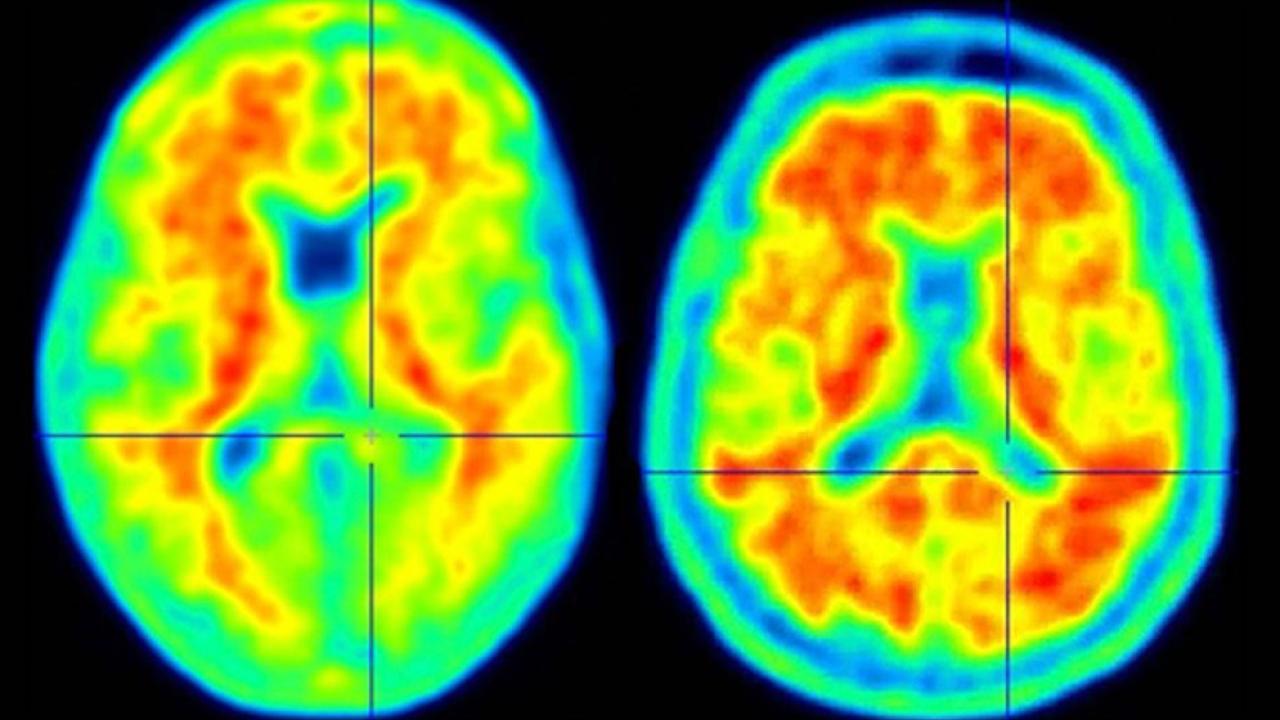
Estrogen binding to estrogen receptors in cerebral cortical neurons.
Increasingly, evidence shows that estrogen may help delay or prevent Alzheimer's disease. Dr. Dominique Toran-Allerand, professor of anatomy and cell biology in the centers for neurobiology and behavior and reproductive sciences, is helping to elucidate the role of estrogen in the brain. Her research provided the impetus for a study published last year in the Lancet, in which CPMC researchers found that postmenopausal women who used estrogen for a year or more significantly delayed or decreased their risk of developing the disease. Furthermore, Dr. Toran-Allerand was the first to show, in the early 1970s, that estrogen stimulates the growth of axons and dendrites in cultured slices of the brain.

More recently (in 1992), Dr. Toran-Allerand and colleagues found in animal studies that receptors for estrogen and receptors for mRNA (which makes the neurotrophin family of growth factors and their receptors) were present on the same neurons.

"What does it mean for a neuron to have receptors for both estrogen and neurotrophins such as nerve growth factor?" she asks. "Cholinergic neurons--the neurons that degenerate in Alzheimer's disease--have estrogen as well as neurotrophin receptors. The brain needs estrogen for optimal maintenance of neurons that have estrogen receptors."

Dr. Toran-Allerand's most recent work, presented at the 1996 annual meeting of the Society for Neuroscience and to be presented at the 1997 meeting in October, investigates exactly how estrogen sends signals in the brain. Current dogma suggests that estrogen acts by diffusing into cells and binding to receptors in the nucleus, which then go on to regulate various genes. But, says Dr. Toran-Allerand, estrogen could also share signaling pathways with neurotrophins, since their receptors exist in the same neurons. "Many genes that estrogen supposedly regulates don't have estrogen-responsive sequences in DNA," she says. "So estrogen may use another way of getting a signal from the cell membrane to the nucleus."

Estrogen receptor mRNA in the neurons of the cerebral cortex.
Dr. Toran-Allerand and colleagues have found that estrogen can quickly activate proteins that are part of the neurotrophin signaling pathway. Estrogen enters the cell and immediately activates certain cytoplasmic enzymes--extracellular-signal-regulated kinases or ERKs--that relay neurotrophin signals from the receptors at the cell surface to the nucleus.

This finding may eventually lead to the development of estrogen-like drugs to treat disorders, such as Alzheimer's disease, with fewer side effects. "Ideally, one could design a drug that would stimulate only the pathway specific to the brain, if there is one, but not pathways that lead to feminizing side effects, for instance. This would mean that men with Alzheimer's could be treated with the drug," she says.


copyright ©, Columbia-Presbyterian Medical Center

[Go to start of Document]